Avoid Costly Mistakes: Bay Area Construction Bids
Residential Construction, Bay Area, Cost Estimates
Why the Lowest Bid Can Be the Most Expensive Choice for Bay Area Homeowners
Part 1 of 4 in our guide to understanding residential construction estimates.
When homeowners receive several construction proposals, the first instinct is to compare the totals. That is understandable. A major renovation, addition, or custom home is a substantial investment, and nobody wants to pay more than necessary.
But a lower estimate does not mean a lower-cost project. Two contractors may appear to be bidding the same plans while pricing very different scopes, finish levels, labor standards, and assumptions.
Bay Area Construction Costs Do Not Match National Averages
This matters even more in Santa Clara County, where construction costs are substantially different from national averages or the numbers found on general home-improvement websites. Labor rates, subcontractor availability, municipal review timelines, and local code requirements in Los Altos, Saratoga, and Los Gatos all push real costs well past what a national cost calculator will show you.
A price that sounds reasonable online often has little connection to the cost of completing that same project here.
Start With the Scope, Not the Total
A good construction estimate should give a homeowner a realistic picture of what it takes to get from the beginning of the project to a finished home. Yet many proposals concentrate only on the core construction work.
A proposal might include demolition, foundation, framing, roofing, plumbing, electrical, HVAC, insulation, and drywall. Those are major components, but they are not the entire project.
Before framing begins, there are already meaningful costs for jobsite setup, temporary fencing, temporary power, protection of existing areas, hazardous-material testing, demolition preparation, hauling, disposal, and equipment. At the end of the project, there is still cabinetry, countertops, flooring, tile, plumbing fixtures, lighting, appliances, interior doors, hardware, finish carpentry, painting, punch-list work, and final cleaning.
If one contractor includes most of those items and another stops at a more basic level of completion, their totals are not comparable.
A $900,000 Proposal Can Cost More Than a $1,050,000 Proposal
Imagine receiving three proposals for the same project:
$900,000
$1,050,000
$1,300,000
The temptation is to assume the $900,000 contractor is offering the best value. That may be true, but the number by itself cannot tell you.
The lower proposal may contain unrealistic allowances, missing scope, misunderstood plan details, lower-grade materials, less supervision, or a lower standard of workmanship. The $1,050,000 proposal could be the most complete and realistic of the three. The $1,300,000 proposal might cover a similar scope at a higher pricing structure — or it might include work the other two simply missed.
Price alone cannot tell you which contractor is expensive and which one is accurate.
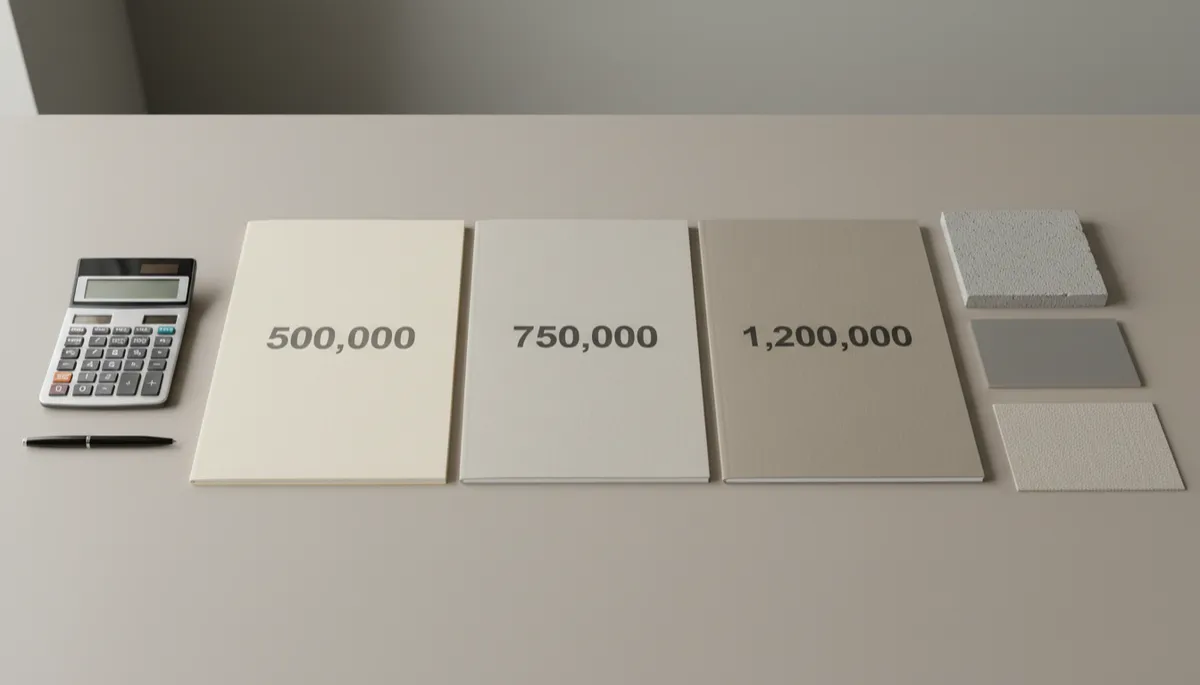
Similar-looking bids can hide very different scopes, allowances, and quality standards.
General Labels Are Not Enough
One of the hardest proposals to evaluate is the one that lists categories such as “foundation,” “framing,” “stucco,” “electrical,” and “drywall” with a dollar amount next to each.
Those labels tell you nothing about materials, installation standards, finish levels, exclusions, or what the contractor assumed when preparing the price. If a proposal is vague, you will need to ask detailed questions just to determine what is actually included.
The answers belong in writing. Construction projects run many months, and relying on everyone to remember a verbal conversation from before the project began is a reliable way to create disagreements later.
Quality Exists Behind the Walls Too
Another difference between proposals is the experience and quality of the people performing the work. Experienced, properly insured tradespeople cost more than untrained or inadequately supervised labor.
The differences are not limited to the finishes you can see. Plumbing placement, electrical layout, waterproofing, flashing, framing connections, mechanical installations, and preparation behind finish materials all determine the quality and durability of the finished home.
A beautiful tile job cannot make up for poor waterproofing behind the wall. A low framing number is not a bargain if it produces problems that have to be corrected later.
The Better Question to Ask
Instead of beginning with “Which contractor is cheapest?” ask:
That question changes the conversation from shopping for a number to evaluating the complete project.
Next in the Series & About Bella Casa Builders
A proposal can look complete and still mislead you if the allowances are unrealistically low. Part 2 looks at how a $20,000 cabinet allowance makes one contractor appear far less expensive than another — even when the final cost tells a very different story.
Explore the Full Series
1. Why the Lowest Bid Can Be the Most Expensive Choice for Bay Area Homeowners — You are here
2. Construction Allowances: Where a Low Bid Becomes Expensive
3. The Scope of Work: What Are You Actually Buying?
4. Change Orders, Hidden Conditions, and Comparing Contractors
Bella Casa Builders is a design-build general contractor serving Los Gatos, Saratoga, Los Altos, and the surrounding Santa Clara County communities. Licensed since 1991 (CSLB #B655544), the firm specializes in custom homes, additions, ADUs, and whole-house renovations, helping homeowners navigate complex estimates with clarity and confidence.